Tibetan Mastiff
An ancient Himalayan guardian with an imposing mane, the Tibetan Mastiff is calm, independent and highly protective.
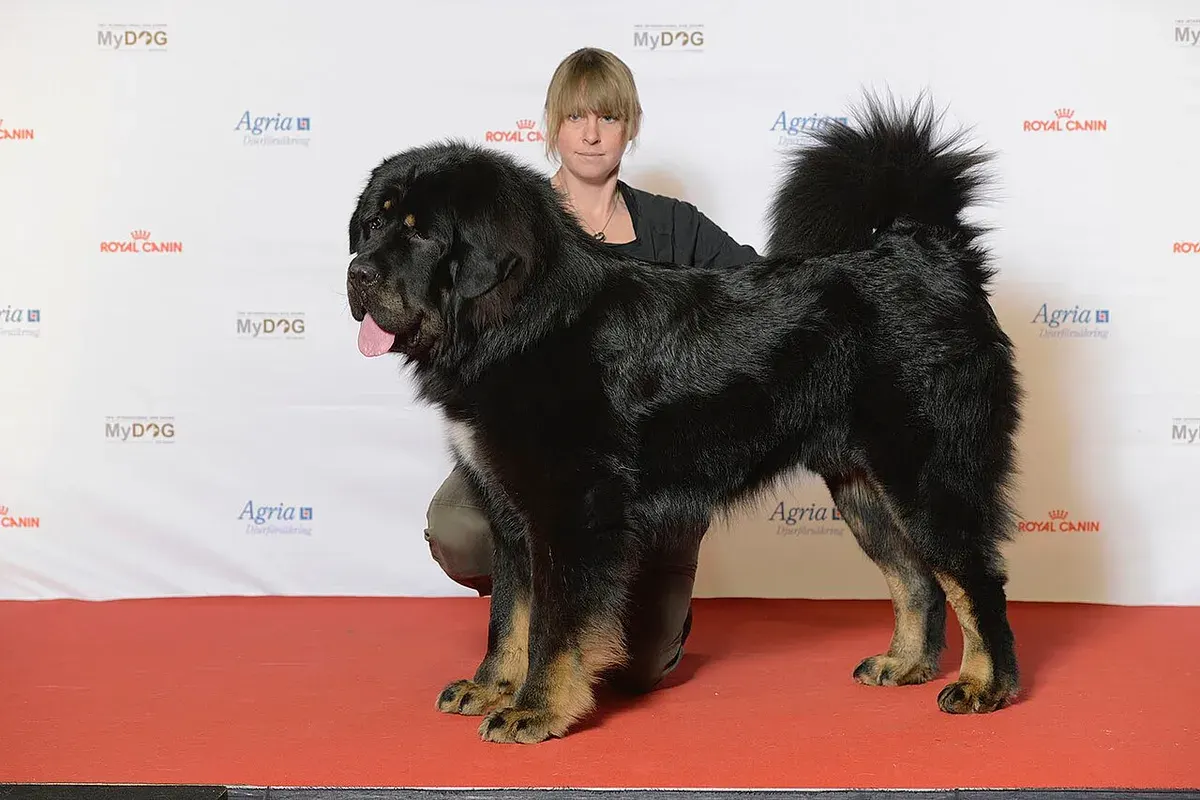
History and origins
The Tibetan Mastiff guarded villages, monasteries and nomads' flocks on the high Himalayan plateaus for centuries. Several Western travellers, including Marco Polo, described it.
It is a primitive breed; females often have only one heat cycle a year.
Temperament
Calm, dignified and independent, the Tibetan Mastiff is protective of its family and wary of strangers. It is often more active at night and barks as a deterrent.
It needs an experienced owner, early socialisation and patient training.
Some regions restrict ownership of this breed; check your local regulations.
Health
This is a fairly robust breed. Hip dysplasia, hypothyroidism and some inherited neurological conditions have been reported.
Regular veterinary follow-up is recommended.
This is general information. For any question about your dog's health, consult a veterinarian.
Feeding
It often eats less than its size would suggest. Good-quality large-breed food in two meals suits it.
Avoid excess weight.
Exercise
Calm daily walks and a large, secure property are enough.
High, solid fencing is essential.
In summer, provide shade, coolness and water, and avoid outings in the hot hours. It is unsuited to apartments.
Grooming
Its thick double coat needs weekly brushing and intensive grooming during the big annual moult.
Do not shave it.