Rottweiler
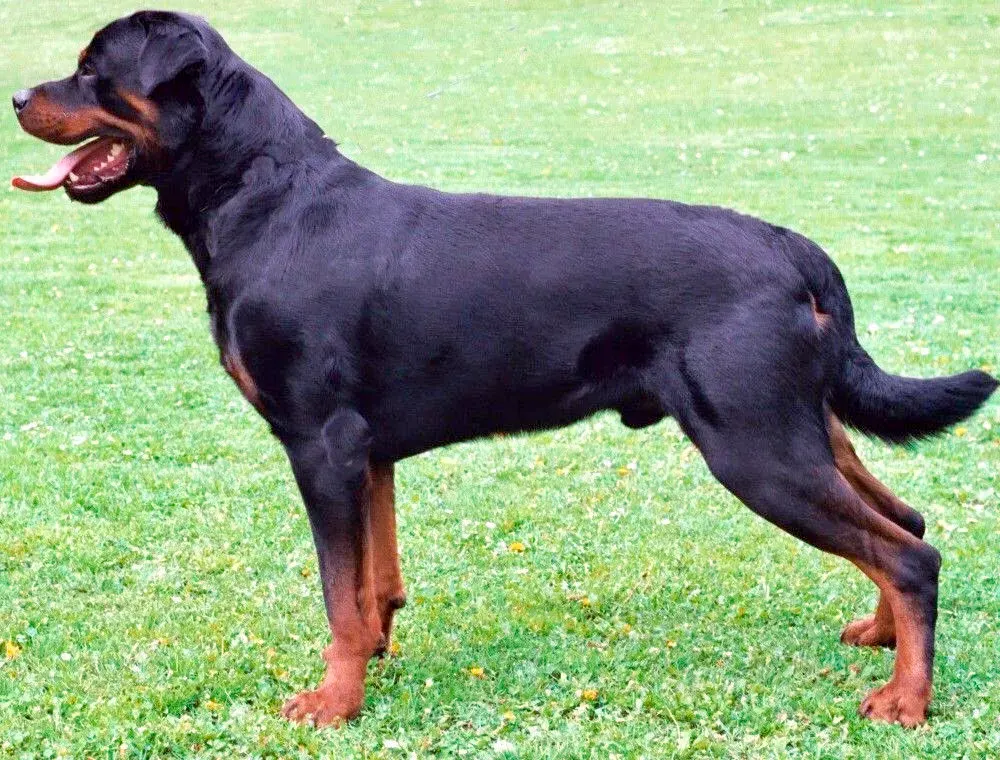
Powerful, calm and self-assured, the Rottweiler is a devoted guardian and an affectionate companion when well trained and socialised.
History and origins
The Rottweiler is named after the town of Rottweil in southern Germany, where butchers and cattle dealers used it to drive herds and protect their money on the way to market.
When railways made this role disappear, the breed was saved in the early 20th century thanks to its qualities as a guard and police dog.
Temperament
Balanced, confident and deeply attached to its family, the Rottweiler is a natural protector, reserved with strangers. When well trained it is calm at home and can be very gentle with children it knows.
Its strength calls for firm but kind training from puppyhood, extensive socialisation and owners who can handle it physically.
Some regions restrict ownership of this breed; check your local regulations.
Health
Like many large breeds, it can be affected by hip and elbow dysplasia. Bone cancer and heart conditions have also been reported in the breed, so a good breeder screens their breeding dogs.
Its relatively short life expectancy makes regular veterinary follow-up all the more important.
This is general information. For any question about your dog's health, consult a veterinarian.
Feeding
It needs food suited to large breeds, especially while growing, to avoid overly fast weight gain that weakens the joints. Adult Rottweilers tend to put on weight, so measure portions.
Two meals a day and rest after eating reduce the risk of bloat.
Exercise
It needs about an hour of exercise a day: walks, games, obedience and scent activities. It enjoys having a job to do.
Avoid intense exercise in hot weather and while the young dog is still growing.
Walk it early in the morning and late in the evening, and never leave it in the sun or in a car. A house with a fenced garden suits it better than an apartment.
Grooming
Its short, dense coat is easy to brush once a week, with more frequent brushing during the moult.
Clean its ears regularly and keep an eye on its nails.