Dobermann
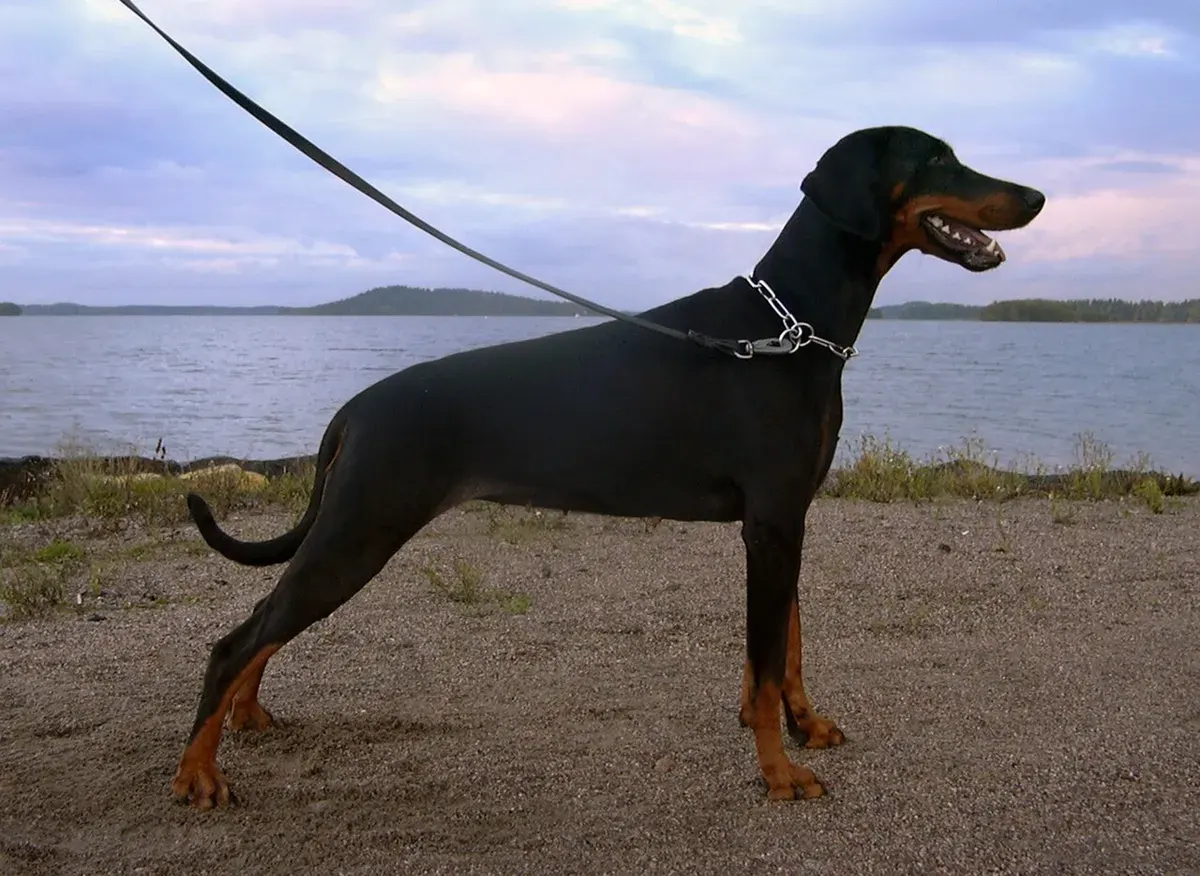
Elegant, fast and highly intelligent, the Dobermann is a loyal guardian and a sensitive companion that needs activity and human company.
History and origins
The Dobermann was created in late 19th-century Germany by Louis Dobermann, a tax collector who wanted a quick, brave protection dog to accompany him on his rounds.
Later bred for a steadier temperament, it became a guard, police and family dog valued around the world.
Temperament
Attentive, loyal and very close to its owners, the Dobermann loves to be part of family life. It is watchful and protective, but often more sensitive than people expect.
It learns quickly and responds very well to positive, consistent training. Loneliness and inactivity weigh heavily on it.
Health
The breed is affected by dilated cardiomyopathy, a disease of the heart muscle, so regular cardiac screening by a veterinarian is recommended. Von Willebrand disease (a clotting disorder), hip dysplasia and bloat also occur.
Choose a breeder who health-screens their breeding dogs.
This is general information. For any question about your dog's health, consult a veterinarian.
Feeding
Good-quality, protein-rich food matched to its activity keeps its athletic build. It should stay lean and muscular.
Split the ration into two meals and avoid exercise straight after eating.
Exercise
It needs at least one to two hours of daily activity: running, brisk walks, ball games, obedience or tracking.
Mental exercise matters as much as physical effort for its well-being.
Its very short coat helps it cope with heat, but gives little protection from direct sun: walk it early in the morning and in the evening in summer, and always provide shade and fresh water. It can live in a city if it gets plenty of exercise, but a house with a garden is still preferable. It is not a dog to leave alone outdoors: it needs to live with its family.
Grooming
Its short, glossy coat needs only a grooming mitt or brush once a week. Keep an eye on nails and teeth.
Its thin coat makes it sensitive to cold in winter.