Boxer
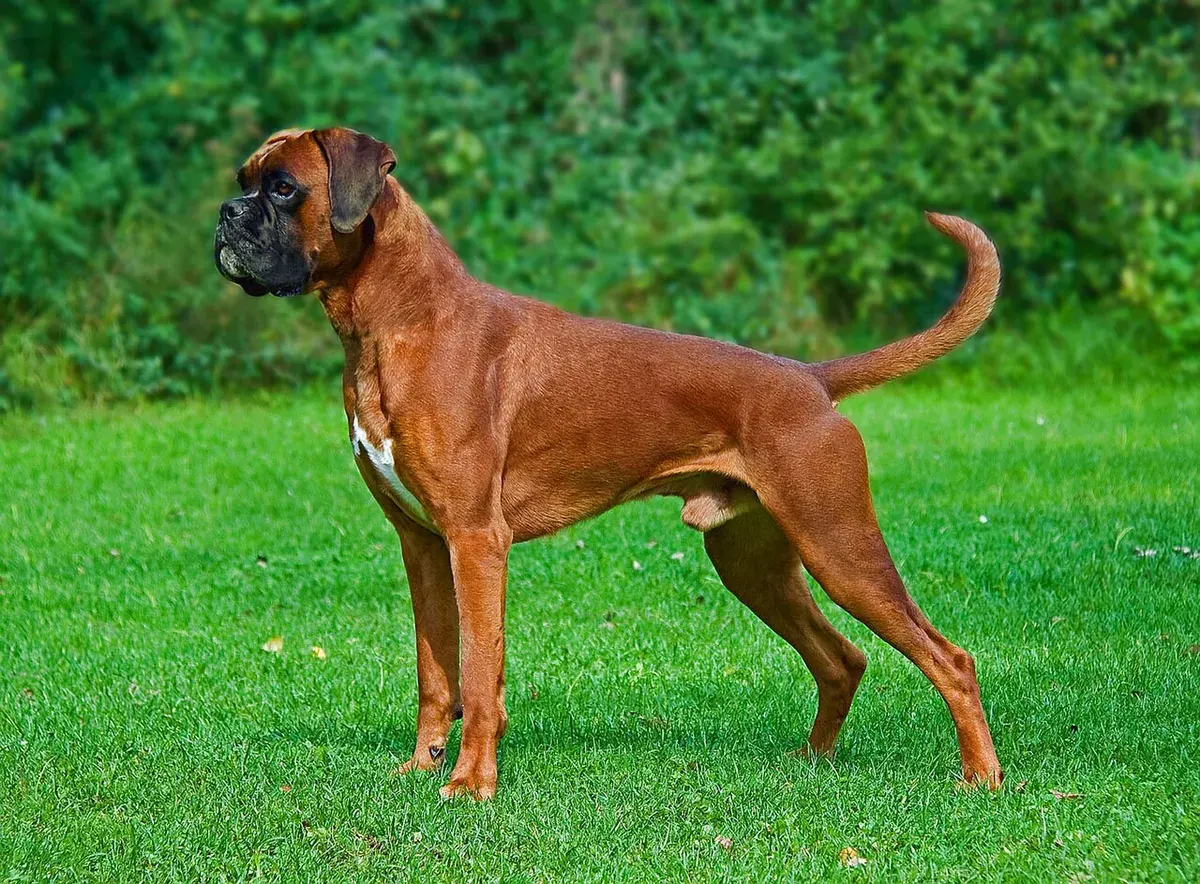
Playful, affectionate and full of energy, the Boxer is an excellent family dog, patient with children but very sensitive to heat.
History and origins
The Boxer was developed in Germany in the late 19th century from old hunting mastiffs, the Bullenbeisser, crossed with bulldogs. It served as a guard dog, messenger dog and police dog.
Its cheerful nature later made it one of the most popular family dogs in Europe.
Temperament
Enthusiastic, clownish and very attached to its people, the Boxer keeps a puppy-like spirit for a long time. It is usually patient and protective with children.
Watchful, it announces strangers. It needs consistent, upbeat training, as it can be stubborn and very boisterous.
Health
Its short muzzle makes it prone to breathing difficulties and heatstroke. The breed is also exposed to certain heart diseases, skin tumours and bloat.
Regular veterinary check-ups, including heart checks, are advised.
This is general information. For any question about your dog's health, consult a veterinarian.
Feeding
Good-quality food matched to its activity keeps it muscular. Two meals a day and rest after eating reduce the risk of bloat.
Limit treats: an overweight Boxer breathes less easily.
Exercise
It needs one to two hours of activity a day, with games, runs and training sessions. It loves playing with its family.
In hot weather, cut exercise intensity right down.
In summer, take it out only early in the morning or late in the evening, keep it somewhere cool indoors and watch for excessive panting. It can live in an apartment if it gets enough exercise and is not left alone for too long.
Grooming
Its short coat takes a few minutes of brushing a week. Clean the folds of the muzzle regularly.
White or very pale Boxers are prone to sunburn.